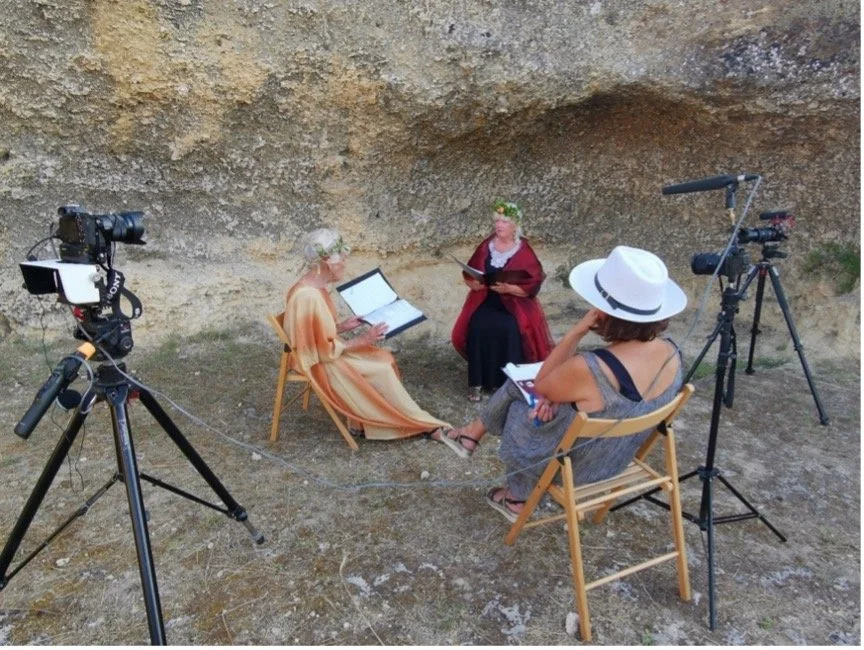
A Journey of the Work 2018-2025
PERSEPHONE’S RETURN
A contemporary mother- daughter duologue inspired by the Persephone/Demeter myth. Persephone’s Return began as an intuitive response to the Eleusinian Mysteries. It emerged through an encounter with landscape, myth, migration, performance, and stories of return.
Since its writing in 2019, the work has evolved across multiple years, sites, readings, and interconnected artistic forms, including opera, digital installation, film, live reading, exhibition, and immersive media.
These projects remain in active development, each representing different manifestations of the mythic inquiry.
ELEUSINA (2018)
In 2018, I attended a private tour of the Eleusina Archaeological Site with a group of friends and colleagues, led by archaeologist Popi.
She showed us where myth and ritual once met.
The cave.
The mirthless rock.
The initiates waiting.
The theatricality of the landscape was immediate.
Not abstract.
Embodied.
Spatial.
Alive.
I asked:
“Has the myth ever been enacted here in modern times?”
“No,” she replied.
“But there has been talk of it.”
“Someone should do it”, I said.
Unbeknownst to me, that question planted a seed.
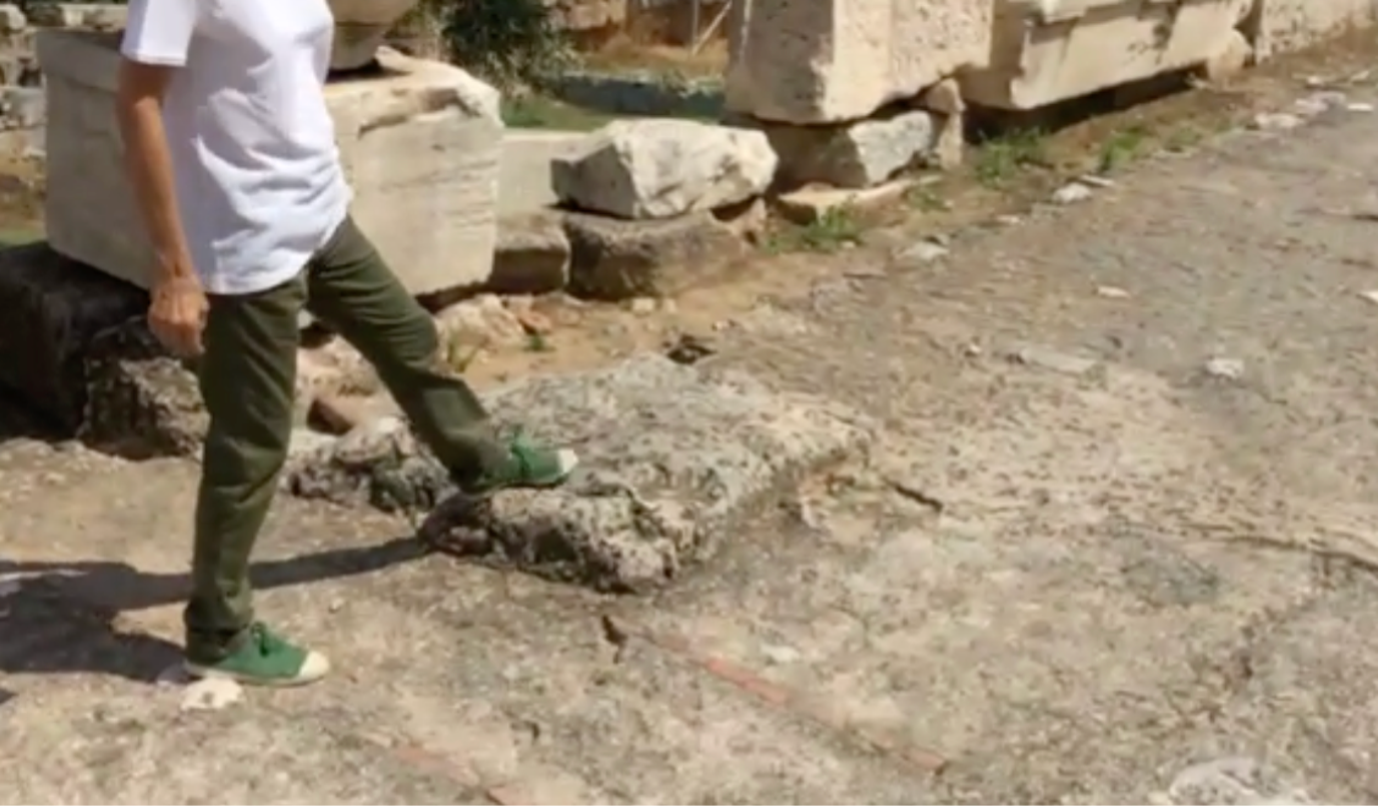
The Mirthless Rock
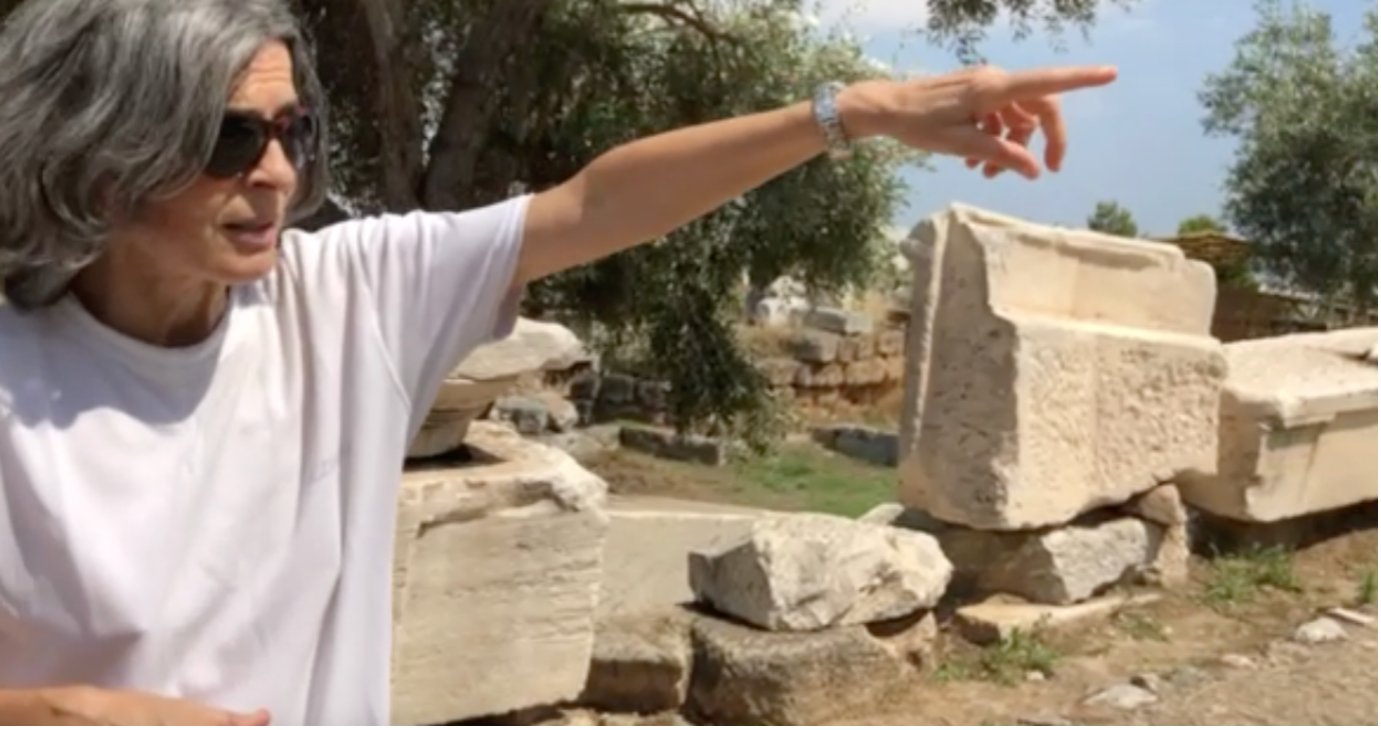
Popi points to …
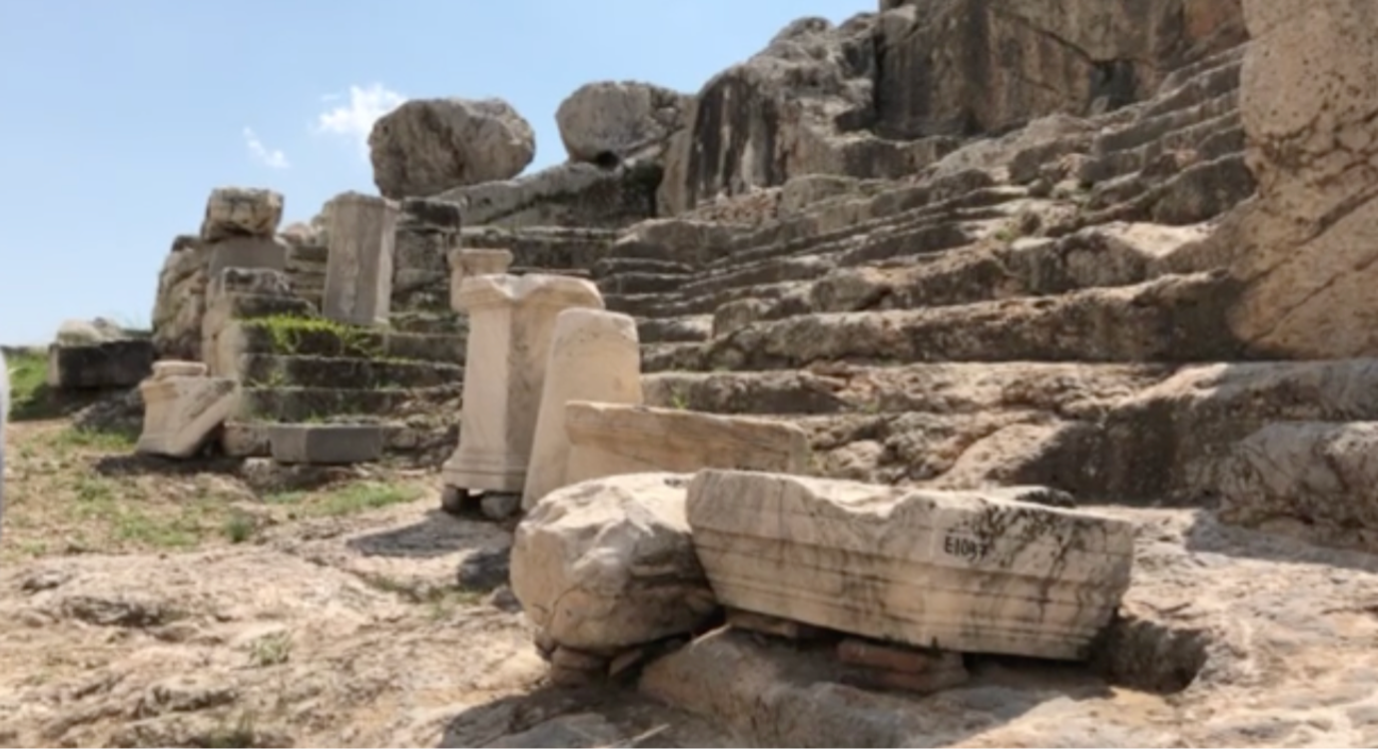
…..the area where the initiates waited
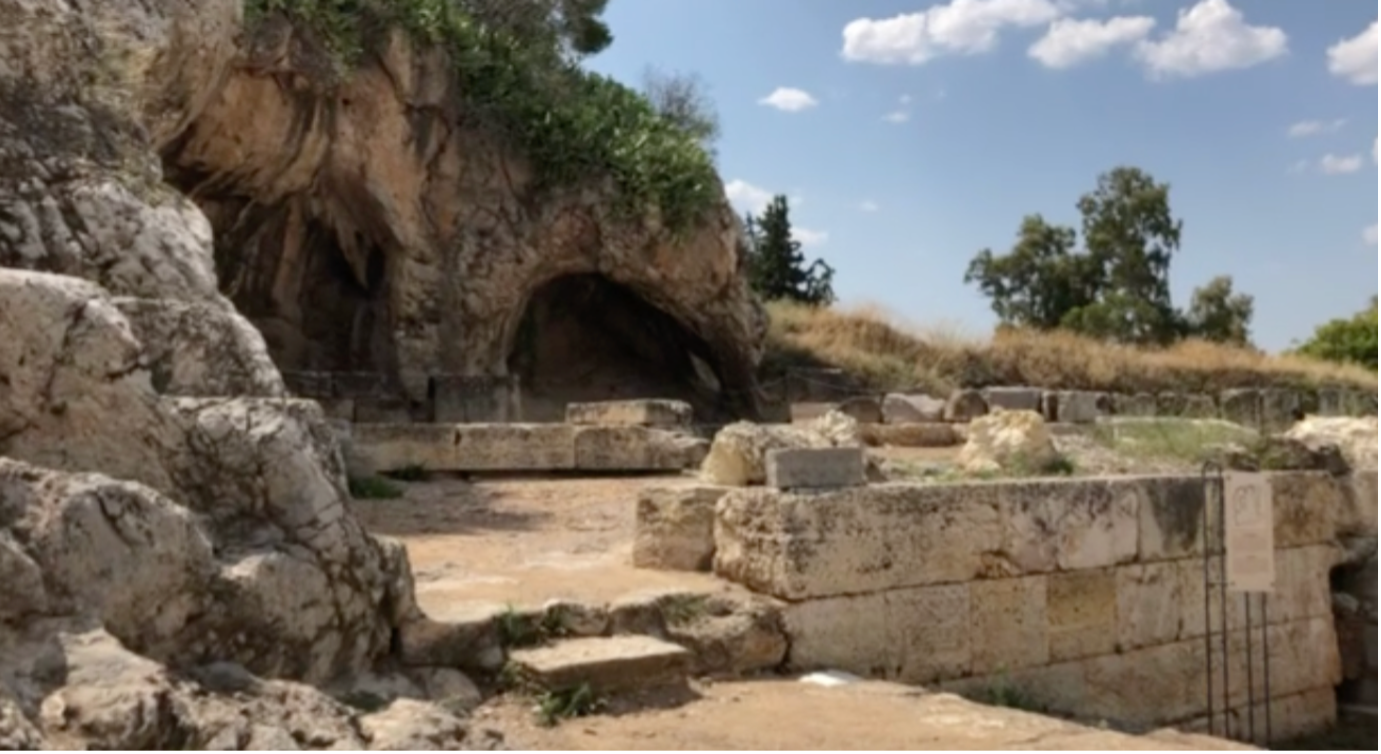
Pluto’s cave - where Persephone was said to appear each year
MAZARAKATA / WRITING THE DUOLOGUE (2019)
THE MATURATION OF PERSEPHONE
I travelled to Kefalonia for an artist residency at the Ionian Centre for the Arts and Culture.
My enquiry: What had happened to Persephone in the Underworld?
She was more than simply the victim of Hades.
She became Queen of the Underworld.
What had brought about her maturation?
At a dinner in Athens, academics asked which authorities or classical scholars I would be referencing. I had no idea.
The 6th century Homeric poem ‘Hymn to Demeter’ unfolds largely through Demeter’s grief in the upper world.
Yannis Ritsos poem ‘Persephone’, later wrote of her return.
But neither answered the question that continued to haunt me:
What had Persephone undergone in the underworld?
What had transformed her from Kore to Queen?
I visited the Mazarakata tombs daily.
To sit.
To listen.
To wait.
One morning, the light divided the landscape into shadow and illumination.
Through the light, I saw a distant castle and imagined Demeter running toward her daughter.
To the right, within darkness, the tombs from where Persephone might emerge.
Between them:
The point of meeting.
I had no idea what would take place.
Only that something would.
I sat with this.
Contemplating.
Incubating.
Breathing with the site.
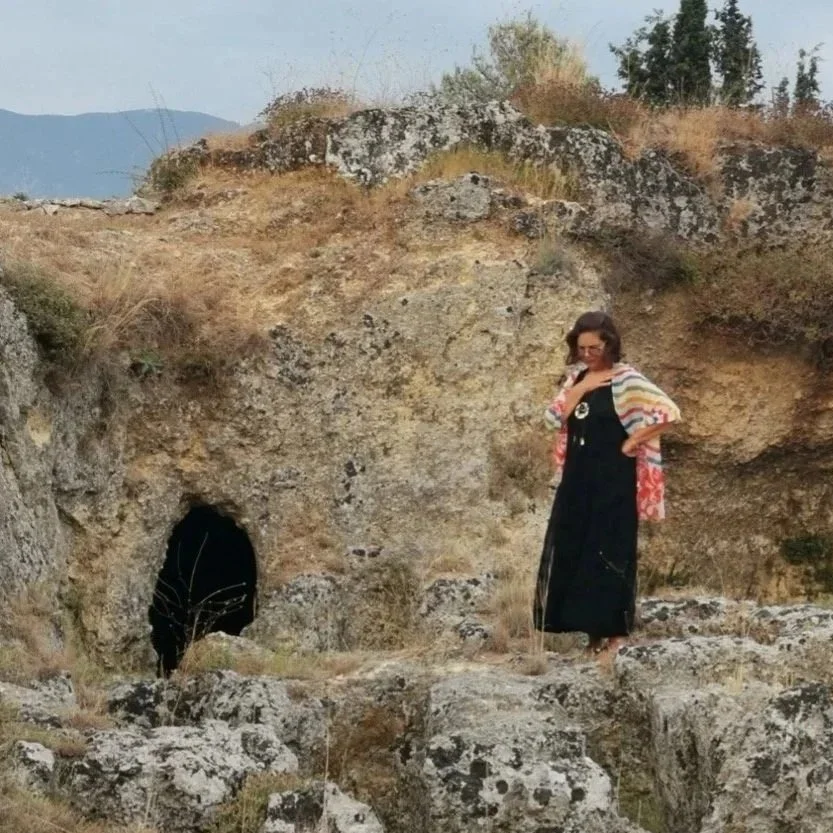
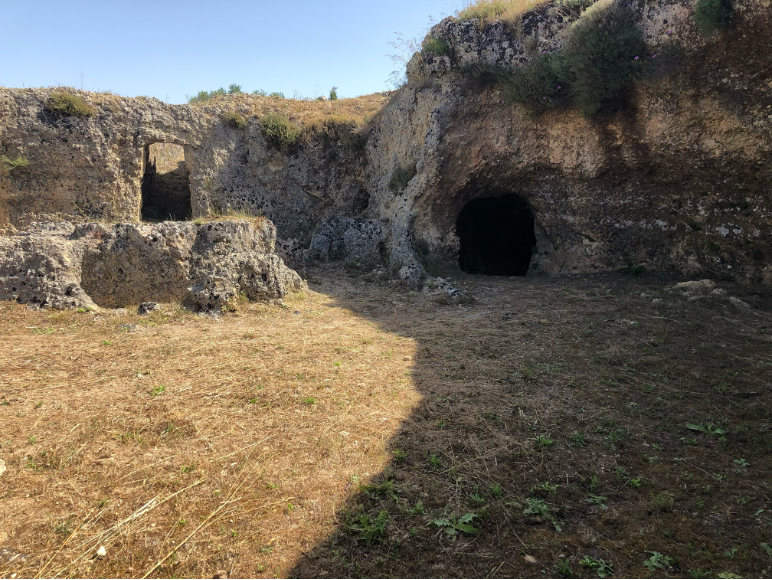
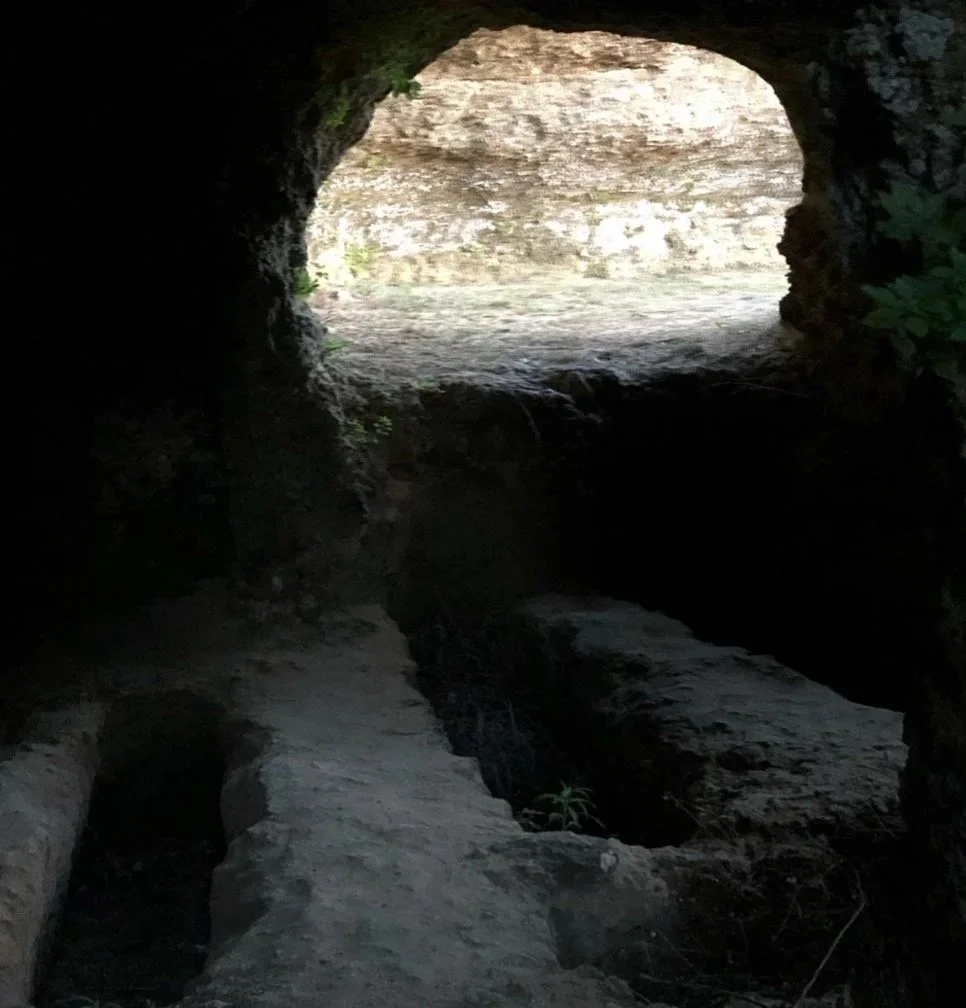
A week later, on the island of Kastos, I wrote the first draft of Persephone’s Return.